Little Room Solutions: Compact Interlocking Pathway Paving Installment Concepts
Tight lawns and townhouse whole lots ask you to do even more with less. A narrow side course that obtains muddy, a tight front strategy that needs dignity, a sliver in between driveway and planting bed you wish might in fact work. Interlocking pavers succeed here. They come together such as well made joinery, lock under compaction, and hold their line also when squeezed in between foundations and fencings. When set up with treatment, they look customized rather than cramped, and they solve much more issues than poured slab in minimal space.
I have actually restored more little sidewalks than I can count, from 28 inch service courses to compact yards no bigger than a table. The difference in between an irritating capture and a tranquil little hallway typically originates from a handful of choices at layout, pattern, and edges. What follows are the selections that matter most, plus a field examined installation sequence that appreciates limited access and maintains the job tidy.
Reading the site like a carpenter
The tiniest areas penalize obscure preparation. Prior to you purchase a single paver, measure every fixed point. The clear size in between house home siding and fence blog posts. The swing of an entrance. All-time low of a clothes dryer Walnut Creek outdoor kitchen builders air vent. The depth of the action at the back door. The high and low factors where water already wants to go. In small hallways, a 1 inch oversight can compel you into slivers or awkward cuts that telegram amateur.
Set stringlines and draw a building contractor's level or a laser. If you do not have these, a straight 2x4 with a bubble degree and persistence can still map regular slopes. Go for a minimum of a 1.5 to 2 percent fall away from frameworks - that is roughly 3 to 4 inches over 16 feet. If you intend an absorptive system, the finished surface area can run almost level, but you still need micro grades to steer sheet circulation to where it can soak or splash safely.
Note accessibility limitations. If a skid guide can not get to the backyard, you will certainly relocate base with a wheelbarrow. That modifications your excavation rhythm and what you can genuinely complete in a day. Safeguard neighbors' patience and your very own back by organizing pallets and rock where you can reach them without consistent shuttling.
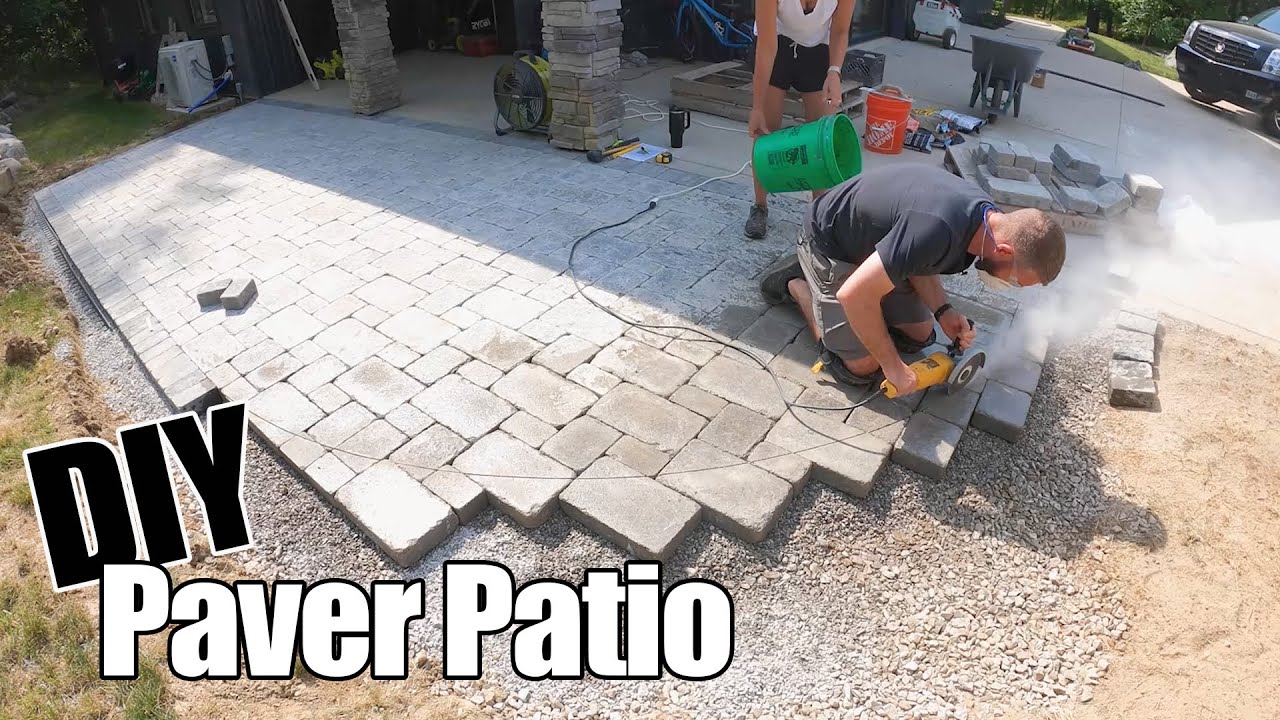
Why interlocking radiates in limited corridors
Interlocking systems distribute lots throughout lots of tiny units. In practice, that implies less breaking and much easier spot repair in constrained spaces. They additionally allow you rip off aesthetically. With the appropriate format and laying pattern, a 30 inch walk can really feel larger and much more composed than a plain 30 inch strip of mop surface concrete.
Modular pavers additionally deal with the little movements that structures and dirts make. Against a structure or along a fencing, frost and origin stress will certainly try to press. An interlocked area with correct side restraint stands up to that creep, and when something does move, you can lift, remedy the base, and relay a square meter in an hour. Attempt that with a hairline in a monolithic pour.
Choosing layouts that fit little spaces
People commonly select the prettiest catalog photo as opposed to what cuts well to their determined width. You can prevent bits and speed installment by matching module dimension to the clear size you measured.
If your stroll requires to be 36 inches and you favor very little cuts, pick pavers that add up to that size, including joints. 3 11.75 inch components with 0.125 inch joints, for instance, land precisely the tape. Planks at 23.5 inches stumble upon a 30 inch passage will need cuts, yet if you turn the alignment so planks run lengthwise, you might prevent them. Block sized devices, around 4 by 8 inches, forgive more wrongs, however can look busy if the space is already tight.
Thickness issues. Residential pathways do great with 60 millimeter concrete pavers. In snowy areas with aggressive plowing, or at changes that attach to Driveway Paving Installment, I frequently specify 80 millimeter for sturdiness. The extra 20 millimeters is not obvious in elevation when you establish the correct base deepness, however it withstands point loads from a jack stand or cart wheel better.
Materials each lug a mood. Concrete systems offer broad shade arrays and crisp dimensional accuracy. Clay brick has warmth, ages with dignity, and provides strong contrast against stucco or siding. All-natural stone sets a premium tone, yet in little rooms it intensifies reducing labor unless you select sawn dimensional flag. If you enjoy rock yet desire simple setup, think about thin all-natural stone paver lines sized like block. They mount on a standard paver base and cut cleanly.
Patterns that soothe or broaden a slim run
Pattern is not decor below, it is a device. Running bond lined up across the brief measurement, with joints that jump like rungs of a ladder, techniques the eye into reading size. Herringbone collection at 45 degrees includes power and locks exceptionally well under factor load, which is why I prefer it for solution corridors where containers, dollies, or a snow blower pass. Piled bond looks modern and sets well with settled design, however it is ruthless - every joint should remain true or the grid reviews uneven at once.
Borders make or damage tiny pathways. A single soldier course at the sides, with the indoor field laid on a contrasting pattern, offers structure. Maintain the boundary to one system if the stroll is under 40 inches clear. Two programs crowd the room. If you make use of a boundary, establish your stringline to the within edge so you can readjust field systems without regularly combating the outside dimension.
Edges that hold without looking bulky
Edge restriction in a tight space is about securing while remaining subtle. A surprise plastic side, surged every 8 to 10 inches, functions well if the adjacent surface area is dirt or mulch. If the side butts to a concrete piece, use a concrete toe: a triangular buttocks of fiber reinforced concrete put tight to the paver edge, concerning 4 inches wide and deep, simply below the completed surface area so it disappears under mulch or crushed rock. In ultra slim side lawns where the fencing messages rest right at the side, I often pin a stress dealt with 2x4 edge to the posts and butt the soldier course versus it. It is not my first choice, but it resolves a fact when spikes can not go down and concrete toe would weaken a post.
Transitions to existing steps and thresholds need precision. The International Residential Code desires a consistent riser height without any variation over 3/8 inch in between steps. When you raise a stroll with a brand-new paver system, confirm you are not producing a journey at the door. Strategy the base density in reverse from the limit, appoint your paver and bed linens density, and strike your mark.
Base preparation that appreciates a small footprint
Walkway Paving Installment fails when base faster ways fulfill freeze thaw or organic dirts. In confined runs you might be attracted to shave depth due to the fact that accessibility is hard. Resist that, and strategy excavation in practical chunks.
For a standard, non permeable pathway in secure dirt, excavate 6 to 9 inches listed below finished quality for 60 millimeter pavers, plus bed linens and compaction allocation. In clay or where downspouts cross the path, go 9 to 12 inches. Usage squashed stone with penalties, commonly called crusher run or 3/4 inch minus. Area in lifts of 2 to 3 inches and portable each lift to refusal with a plate compactor. In limited alleys, a 14 inch plate fits and still delivers enough power. Moisture aids. If the stone is dusty and dry, mist it so it knits.
Geotextile fabric in between indigenous soil and base makes its keep in narrow passages due to the fact that traffic will certainly always be lineal and recurring. A woven or nonwoven separator quits fines from pumping up and keeps your base thickness real with time. Lap seams by at the very least 12 inches. Do not bring material up the sides unless you are constructing a permeable system, or you risk trapping water.
Screed an uniform 1 inch bed linens layer of concrete sand or a tidy manufactured sand. Stay clear of rock dirt or screenings for bed linens; they hold water and can heave. In little job, 2 square screed rails made from 1 inch channel and a straight light weight aluminum level make the procedure foreseeable. Lay the rails on compressed base, pull the screed, and lift the rails meticulously, backfilling the grooves by hand.
When permeability solves more than puddles
If your slim side lawn accumulates every downspout's outcome, an absorptive interlocking concrete paver system can turn the pathway into a quiet soakaway. The build adjustments. No fines in the base. You make use of clear angular rock: commonly 2 inches of ASTM No. 8 (around 3/8 inch) as a setting layer over 4 to 10 inches of No. 57 or 2x as the reservoir, depending on tornado sizing and soil percolation. Joints are full of the exact same tidy accumulation so water passes through.
Permeable systems shine in tiny spaces due to the fact that they can also work as your water drainage course without a surface area swale. I have actually utilized them to eliminate superficial trench drains along structures where loss was limited. Two cautions. Initially, never run an absorptive tank versus a cellar wall without a liner where hydrostatic stress can build. Second, if your soils are tight clay with percolation worse than one half inch per hour, plan an underdrain to daylight or a connection to a storm inlet. The underdrain is a perforated pipeline set at the base of the stone tank, covered in sock, and sloped a minimum of 1 percent.
Walkability, slopes, and snow
Compact walkways need to still pass conveniently. A size of 36 inches clear really feels functional for a single person and a container. If you can pay for 42 inches, do it, particularly at turns. Maintain cross incline mild, around 1 percent, so a stroller will certainly not draw away. For actions, maintain risers consistent and treads at the very least 11 inches deep. If you can remove a single unpleasant action by regrading the method and changing the touchdown, you decrease maintenance forever.
In winter season climates, consider texture and deicing. Herringbone offers extra joint sides, which assists. Avoid extremely smooth surface area coatings on pavers if ice is common. If you make use of deicing salts, verify the paver manufacturer prices the item for freeze thaw with deicers. Securing is optional. In small passages with overhangs that trickle concentrated salts near a door, a breathable silane siloxane sealer can reduce absorption and keep sides crisp.
Micro touchdowns and pocket patios
A narrow run that increases at a bend welcomes a pocket outdoor patio, also if it is only 5 by 7 feet. Set a bistro table there, include a wall surface light, and what was a thoroughfare comes to be a place to stop briefly. The method is to shift patterns without breaking circulation. I frequently keep the area pattern, introduce a boundary that covers the pocket, and change the laying instructions in the square to differentiate it. Shade changes need to be gentle - one shade darker or lighter - so the space checks out coherent as opposed to patchwork.
Where a back action disposes into a lawn strip that transforms to mush, develop a touchdown 2 pavers much deeper than the door swing and two pavers larger on the latch side. It keeps feet tidy and decreases wear at the highest possible traffic point. Basic geometry and one added training course of boundary can make a small room feel deliberate.
Tying right into Driveway Paving Installation
Walkways seldom live alone. They satisfy driveways, aprons, or the visual stroll. If you prepare a new Driveway Paving Installation, straighten components so joints do not dead end at the link. Even a tiny evening light of 6 to 12 inches of shared course can link the two surface areas. Where a sidewalk satisfies an asphalt drive, set a straight concrete edge restriction flush with the asphalt side and connect the pavers to it. Asphalt relocates greater than pavers. The concrete strip works as a translation joint that keeps your pathway from being pushed.
For existing concrete drives, you can dowel a boundary course to the slab if heavy transforming loads intimidate to shear the edge. In most household usage, a surprise edge with spikes and a carefully rated abutment to the piece is sufficient.
Tools and logistics for tight access
On tiny sites, quiet and tidy work matters. I favor a portable plate compactor with a urethane mat, a 4 inch mill with a continual rim diamond blade for tile design detail cuts, and a 10 inch damp saw for straight job. A collapsible light weight aluminum ramp assists you roll barrows over an action without chewing it up. Lay down plywood to secure turf and to make barrow runs smoother. Maintain the jobsite organized like a watercraft - whatever has a place - because you can not afford mess when you have 30 inches in between fence and wall.
If dirt rules are rigorous or next-door neighbors are sensitive, reduced damp. When you have to dry cut, use a shroud and an excellent vac. The time you invest regulating dust is less than the moment you will certainly spend cleaning every home window and car in the blast radius.
A small planning checklist
- Confirm clear size, door swings, pipe bibs, vents, and action heights.
- Map water drainage and select typical or absorptive construct accordingly.
- Choose paver sizes that reduce bit cuts at the measured width.
- Decide side restrictions based upon what the sidewalk abuts.
- Stage gain access to, waste elimination, and material shipment to lessen handling.
A little area installation series that works
- Excavate in areas you can base and lay the very same day, to prevent rainfall softening.
- Place geotextile, after that base in compacted lifts, inspecting slope with every lift.
- Screed a 1 inch bed linens layer, lay boundaries initially, then area to line and pattern.
- Cut borders cleanly, mount restraints, portable with two passes, and cover up joints.
- Rinse, check for lippage with a straightedge, and fine tune prior to last sweep.
Costs, worth, and when to call a pro
Material costs vary by region, but also for a compact interlocking pathway you can expect paver devices at 4 to 10 bucks per square foot for conventional concrete, 8 to 14 for clay block, and 12 to 25 for dimensional natural stone. Base and bed linens products add 1.50 to 4 bucks per square foot. Edge restrictions, polymeric joint sand, and incidentals add another buck or more. Professional labor for Walkway Paving Setup usually runs 15 to 30 dollars per square foot depending on access, demolition, and website conditions. Permeable systems include both material and labor prices, commonly 5 to 10 dollars extra per square foot as a result of much deeper, cleaner rock and more careful grading.
DIY is possible for in shape house owners with patience and a weekend or 2, specifically on straight runs under 300 square feet. Call a professional when gain access to is serious, when you require to tie right into a Driveway Paving Installation that lugs automobiles, or where stormwater policies press you towards absorptive systems with underdrains and engineering. A knowledgeable crew will likewise finish much faster, which matters when you just have one entrance to your backyard and require your life back.
Pitfalls I still see, and just how to stay clear of them
The most usual error in small spaces is stinting base depth because transporting out spoils is hard. You will not see on day one, yet 2 wintertimes later the course will swell. Rental fee a debris container, run a brief ramp, and commit to moving the dirt. Second, individuals fail to remember to examine the final elevation at door limits and end up with a lip at the weatherstrip or a step that runs out code. Begin style from the door and grade away. Third, installers rush edges, set a plastic restriction too expensive, and afterwards spend hours trying to conceal it under thin compost. Dig the toe down so the restraint sits listed below coating quality and does not fight the paver.
Polymeric sand is a good slave and a bad master. Brush it thoroughly, strike lightly, and mist in passes so you do not float the binder onto paver deals with. In questionable, damp streets where moss flourishes, basic jointing sand you can refresh seasonally might be the much better selection. If you demand polymeric there, pick an open rated variation that drains much better and wash even more thoroughly.
Two small website stories
A 34 inch side yard in a 1920s bungalow had a concrete ribbon so cracked you might see weeds raise it. The client desired trash cart gain access to that did not spray mud in rain. The clear size in between stucco and a leaning fencing differed by as much as an inch, so I selected a 4 by 8 concrete block in a 45 degree herringbone with a solitary soldier boundary. We dug 9 inches because clay sat superficial and downspouts hit that corridor. A woven geotextile separated the base. I set a hidden plastic side undecided side, increased hard, and poured a low concrete toe on the home side to remain very discreet. The final width differed within a quarter inch many thanks to the angled pattern forgiving the fence wobble. The carts now slide, and in wintertime the angled joints give grip on light ice.
Another lawn required a dogleg around an a/c unit. The owner desired a pocket to sit with a coffee yet only had an added 5 feet after the turn. We broadened from 36 inches to 54 for that brief run, covered a solitary program border to mount it, and turned the area to a piled bond square to signal room adjustment. The condenser pad connections into the border so the system looks intentional as opposed to plunked. We established the entire system permeable due to the fact that a sump discharge crosses that area. A 6 inch No. 57 stone base with a 4 inch No. 8 setup layer over compressed subgrade offers a silent saturate course to a daylighted underdrain along the fencing. No surface grate, no slip, simply a little square that seems like a selection instead of a compromise.
Detailing that raises the whole
Lighting in tiny strolls makes them safer and moodier. Low bollards or riser lights at actions prevent glare. Keep components out of the main shovel course if you snow clear. Where a sidewalk fulfills plant beds, make use of crushed gravel rather than bark ideal at the paver side. Bark drifts and spots, gravel drains and brushes clean.
Color option benefits from restraint. In limited spaces, mid tones conceal dust, dark tones hide scuffs yet show salt. A blended combine with 2 or 3 tones softens seams and cuts, which aids if your hallway pressures several infill items. Set out two or three example squares on website prior to you dedicate. Colors checked out various under foliage color than under a white stucco wall.
For cutting, prevent munching. If a pipeline or message invades the area, design template the cut with cardboard, transfer to the paver, and reduced tidy contours with a series of straight relief cuts and a coating hand down a damp saw. An accurate cut around an obstacle in a walkway draws the very same appreciation a tight miter does on a closet face.
Maintenance scaled to actual life
Sweep periodically and draw moss from joints where color remains wet. If you picked a permeable system, vacuum the surface with a store vac yearly to lift penalties from the top half inch of joint accumulation, after that cover up with fresh rock. Where trees go down tannins, rinse after heavy falls so spots do not established in the permeable jointing material.
If negotiation shows with time near a downspout, do not deal with it. Pull the sunken location back to secure boundary or stringline, readjust base, re screed, and relay. A square meter repair on an interlocking pathway takes a morning and pays you back every day you stroll it.
When little comes to be elegant
The best small pathways do greater than link A to B. They create a tiny procession. A subtle boundary, a gentle modification in pattern at a bend, a landing that welcomes you with 2 additional pavers of room, a regular slope that keeps feet dry in a rainstorm. Interlocking systems provide you the vocabulary to do all that in inches. Plan with a tape in hand, choose components that value your width, and build a base as if you were laying an outdoor patio two times the size. The craft checks out, and the room, nonetheless tight, will really feel confident.